If you’re exploring HubSpot CRM Pricing, you’re not alone. Thousands of businesses are weighing costs, features, and scalability—so let’s cut through the noise and reveal exactly what you’re paying for in 2024.
HubSpot CRM Pricing Overview: What You Get for Your Money

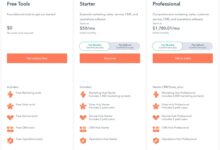
HubSpot CRM is one of the most popular customer relationship management platforms on the market, known for its user-friendly interface and powerful automation tools. But understanding HubSpot CRM Pricing isn’t as simple as picking a plan and paying a flat fee. The platform operates on a tiered model, with pricing that scales based on features, team size, and usage levels. At its core, HubSpot offers a free CRM, but most growing businesses eventually need to upgrade to access advanced tools.
Free CRM: The Gateway to HubSpot’s Ecosystem
The free version of HubSpot CRM is surprisingly robust. It includes contact and deal management, email tracking, meeting scheduling, and basic reporting. For solopreneurs or startups with minimal sales activity, this can be more than enough to manage customer relationships effectively.
- Contact and company management
- Email tracking and logging
- Task and deal pipeline management
- Integration with Gmail and Outlook
While the free plan doesn’t include automation or advanced analytics, it’s an excellent entry point. According to HubSpot’s official pricing page, over 150,000 companies use the free CRM, making it one of the most widely adopted entry-level CRMs globally.
Paid Tiers: From Starter to Enterprise
HubSpot CRM Pricing becomes more complex when you move into paid tiers. These are divided into three main product suites: Sales Hub, Service Hub, Marketing Hub, and Content Hub. Each has its own tiered structure—Starter, Professional, and Enterprise—with prices increasing significantly at each level.
- Sales Hub: Starts at $18/month (billed annually) for Starter
- Service Hub: Begins at $45/month for Starter
- Marketing Hub: Starts at $18/month (Starter) and goes up to $5,000+/month
- Content Hub: Bundles CMS and content tools, starting at $23/month
It’s important to note that HubSpot CRM Pricing is not a one-size-fits-all model. You pay per feature set and per user, which can quickly escalate costs as your team grows.
“HubSpot’s pricing transparency is both a strength and a trap. The low entry point is enticing, but the real cost emerges as you scale.” — SaaS Industry Analyst, 2024
Breaking Down HubSpot CRM Pricing by Product Suite
To truly understand HubSpot CRM Pricing, you need to dissect it by product suite. Each hub serves a different function and comes with its own cost structure. Let’s dive into each one and see what you’re actually paying for.
Sales Hub: Powering Your Sales Team
Sales Hub is where most users begin their paid journey. It enhances the free CRM with automation, templates, and advanced reporting. The Starter plan ($18/user/month) includes email templates, sequences, and basic automation. The Professional plan ($800/month for up to 5 users) adds workflow automation, deal stages, and custom reporting.
- Email sequences and templates
- Meeting scheduling with AI-powered suggestions
- Custom reporting and dashboards
- Playbooks for sales guidance
The Enterprise tier ($3,200/month) is designed for large sales teams needing advanced compliance, audit logs, and SLA management. For detailed feature comparisons, visit HubSpot Sales Hub Pricing.
Service Hub: Customer Support Made Scalable
Service Hub starts at $45/user/month (Starter) and is ideal for companies building a customer support team. It includes ticketing, knowledge base, live chat, and customer feedback tools. The Professional plan ($450/month for up to 5 users) adds automation, reporting, and customer journey mapping.
- Ticketing system with SLA tracking
- Knowledge base with SEO-friendly articles
- Live chat and chatbots
- Customer satisfaction surveys
Enterprise Service Hub ($1,800/month) includes AI-powered chatbots, advanced reporting, and team productivity analytics. This tier is best suited for companies handling high volumes of customer inquiries.
Marketing Hub: From Leads to Revenue
Marketing Hub is where HubSpot CRM Pricing really starts to climb. The Starter plan ($18/month) includes email marketing, landing pages, and basic analytics. The Professional plan ($800/month) adds A/B testing, lead nurturing, and advanced segmentation.
- Email marketing with personalization
- Landing pages and forms
- Ad management and social media tools
- Lead scoring and nurturing workflows
The Enterprise tier ($3,200/month) includes predictive lead scoring, custom behavioral tracking, and multi-touch attribution. For marketers, this is where HubSpot becomes a full-fledged marketing automation platform. Learn more at HubSpot Marketing Hub Pricing.
Hidden Costs in HubSpot CRM Pricing You Can’t Ignore
While HubSpot advertises low starting prices, the real cost often lies beneath the surface. Many businesses are surprised by additional fees, user-based pricing, and feature limitations that force upgrades. Let’s uncover the hidden costs that impact your bottom line.
User-Based Pricing: The Silent Budget Killer
HubSpot CRM Pricing is primarily user-based. This means every team member who needs access to the platform must be assigned a seat, and each seat comes with a monthly fee. While this seems straightforward, it can become expensive quickly.
- Adding a single sales rep on Sales Hub Professional costs $160/month
- Support agents on Service Hub add $45–$90/month each
- Marketing team members on Marketing Hub Professional cost $160/month
If you have a team of 10, that’s $1,600/month just for Sales Hub Professional—before any add-ons. And if you’re using multiple hubs, costs multiply. This per-user model makes HubSpot less attractive for large teams unless you’re prepared for a significant investment.
Feature Gating: Why You’ll Need to Upgrade
HubSpot strategically limits key features to higher tiers. For example, workflow automation is only available in Professional and Enterprise plans. Similarly, advanced reporting, custom dashboards, and predictive analytics are locked behind paywalls.
- No automation in free or Starter plans
- Limited reporting in lower tiers
- AI tools only available in Enterprise
This creates a “freemium trap” where users start with the free CRM, grow dependent on the platform, and eventually must upgrade to continue scaling. It’s a smart business model for HubSpot—but can be costly for users.
“The free CRM is a gateway drug. Once your team is trained and data is in, switching becomes nearly impossible.” — Tech Startup Founder, 2023
HubSpot CRM Pricing vs Competitors: How Does It Stack Up?
To evaluate whether HubSpot CRM Pricing is fair, we need to compare it to alternatives like Salesforce, Zoho CRM, and Pipedrive. Each platform has its strengths, but pricing models vary significantly.
Salesforce: The Enterprise Giant
Salesforce is often seen as HubSpot’s main competitor, especially in the enterprise space. Its Essentials plan starts at $25/user/month, similar to HubSpot’s entry-level pricing. However, Salesforce’s complexity and implementation costs are much higher.
- Salesforce requires more training and setup
- Customization is powerful but technical
- Overall TCO (Total Cost of Ownership) is higher than HubSpot
While Salesforce offers deeper customization, HubSpot wins on ease of use and onboarding speed. For SMBs, HubSpot CRM Pricing is often more predictable and manageable.
Zoho CRM: The Budget-Friendly Alternative
Zoho CRM starts at just $14/user/month (billed annually) and includes many features that HubSpot locks behind higher tiers. It offers workflow automation, AI-powered insights, and multi-channel communication even in lower plans.
- Lower entry price than HubSpot
- More features included at base level
- Highly customizable for technical users
However, Zoho’s interface is less intuitive, and its ecosystem isn’t as tightly integrated as HubSpot’s. For non-technical teams, HubSpot’s smoother UX may justify the higher cost.
Pipedrive: Simplicity Over Scale
Pipedrive is a favorite among sales-focused teams. Its pricing starts at $19.90/user/month and emphasizes pipeline management. It’s simpler than HubSpot but lacks the breadth of marketing and service tools.
- Better for pure sales teams
- Less cluttered interface
- No native marketing automation
If you only need a sales CRM, Pipedrive may be more cost-effective. But if you want an all-in-one growth platform, HubSpot CRM Pricing, despite being higher, offers better long-term value.
How to Optimize HubSpot CRM Pricing for Your Business
You don’t have to pay full price for HubSpot. With the right strategy, you can maximize value while minimizing costs. Here’s how to optimize your investment.
Start with the Free CRM and Scale Gradually
The smartest move is to begin with HubSpot’s free CRM. Use it to centralize contacts, track deals, and test integrations. Only upgrade when you hit functional limitations—like needing automation or advanced reporting.
- Train your team on the free version first
- Map out your sales and marketing processes
- Identify pain points that require paid features
This approach prevents overspending and ensures you only pay for what you truly need.
Bundle Hubs for Potential Discounts
HubSpot offers bundled pricing when you purchase multiple hubs together. For example, buying Sales and Marketing Hubs as a suite can reduce the per-user cost compared to buying them separately.
- Contact HubSpot sales for custom quotes
- Bundling can save 10–20% annually
- Larger teams qualify for volume discounts
Always negotiate. HubSpot’s website shows starting prices, but custom contracts can offer better rates, especially for annual commitments.
Monitor Usage and Downgrade Unused Features
Many companies pay for features they don’t use. Regularly audit your HubSpot usage. Are all users active? Are you using automation? Is the knowledge base updated?
- Remove inactive users to cut costs
- Downgrade from Professional to Starter if features aren’t used
- Consolidate tools to avoid redundancy
HubSpot’s analytics dashboard can help identify underutilized features, allowing you to right-size your plan.
Real-World Examples of HubSpot CRM Pricing in Action
Theoretical pricing is one thing, but real-world usage tells a different story. Let’s look at three businesses and how HubSpot CRM Pricing impacted their operations.
Startup Example: 5-Person Team on Starter Plans
A tech startup with 5 employees uses Sales Hub Starter ($18/user/month) and Marketing Hub Starter ($18/user/month). Total cost: $180/month. They use email sequences, landing pages, and deal tracking. As they grow, they plan to upgrade to Professional for automation.
- Cost-effective for early-stage growth
- Easy onboarding for non-technical founders
- Scalable when funding arrives
This model works well for lean teams focused on rapid iteration.
Mid-Sized Business: 20 Employees on Professional Tier
A 20-person marketing and sales agency uses Sales Hub Professional ($800/month) and Marketing Hub Professional ($800/month). Total: $1,600/month. They leverage workflows, A/B testing, and reporting to manage client campaigns.
- Justifies cost with client ROI
- Centralized data improves collaboration
- High renewal rate due to platform stickiness
For agencies, HubSpot’s all-in-one nature reduces the need for multiple tools, offsetting the higher price.
Enterprise Case: Global Company on Enterprise Plans
A multinational corporation with 200+ users runs Service Hub Enterprise ($1,800/month) and Sales Hub Enterprise ($3,200/month). Total: $5,000+/month. They use AI chatbots, SLA tracking, and custom reporting across regions.
- High cost justified by global support needs
- Advanced compliance and security features
- Dedicated account management from HubSpot
For large enterprises, HubSpot CRM Pricing is part of a broader digital transformation strategy.
Future Trends in HubSpot CRM Pricing (2024 and Beyond)
HubSpot is constantly evolving its pricing model. Based on recent trends, here’s what to expect in the coming years.
Increased AI Integration and Premium Pricing
HubSpot is investing heavily in AI, from content generation to predictive analytics. These tools are currently reserved for Enterprise plans, but expect them to become more central—and more expensive.
- AI-powered sales assistants may become a separate add-on
- Predictive lead scoring could be metered by usage
- Custom AI models may require premium subscriptions
As AI becomes a core feature, HubSpot CRM Pricing will likely shift toward usage-based or tiered AI access.
Potential for Usage-Based Pricing Models
Currently, HubSpot charges per user. But with cloud platforms moving toward usage-based models (e.g., API calls, email sends, storage), HubSpot may adopt hybrid pricing.
- High-volume senders might pay based on email volume
- Storage-heavy accounts could face data caps
- API usage might be metered in future plans
This could benefit small teams with high activity but complicate budgeting for larger organizations.
“The future of CRM pricing isn’t just per user—it’s per value delivered.” — SaaS Futurist, 2024
Is HubSpot CRM really free?
Yes, HubSpot offers a completely free CRM with no time limit. It includes contact management, deal tracking, email integration, and basic reporting. However, advanced features like automation, custom reporting, and team collaboration tools require a paid plan.
What is the cheapest HubSpot CRM plan?
The cheapest paid plan is the Starter tier for any hub, starting at $18/month per user (billed annually). This applies to Sales Hub, Marketing Hub, and Content Hub. Service Hub Starter starts at $45/month per user.
Can I switch between HubSpot CRM plans?
Yes, you can upgrade or downgrade your HubSpot plan at any time. Downgrades take effect at the end of your billing cycle, while upgrades are immediate. HubSpot allows flexibility to scale with your business needs.
Does HubSpot offer discounts for nonprofits or startups?
Yes, HubSpot offers a Startup Program that provides up to $100,000 in free software credits for eligible startups. Nonprofits can also apply for discounted or free access through HubSpot’s nonprofit program.
How does HubSpot CRM Pricing compare to Salesforce?
HubSpot CRM Pricing is generally more user-friendly and affordable for small to mid-sized businesses. Salesforce starts at a similar price point but has higher implementation and training costs. HubSpot is better for teams wanting an all-in-one growth platform with minimal technical overhead.
Understanding HubSpot CRM Pricing is essential for making a smart investment in your business growth. While the free CRM is a powerful tool on its own, the real value—and cost—emerges as you scale into paid tiers. By analyzing your needs, comparing competitors, and optimizing your usage, you can maximize ROI without overspending. Whether you’re a startup, mid-sized company, or enterprise, HubSpot offers a path forward—but only if you navigate its pricing structure wisely.
Further Reading:
